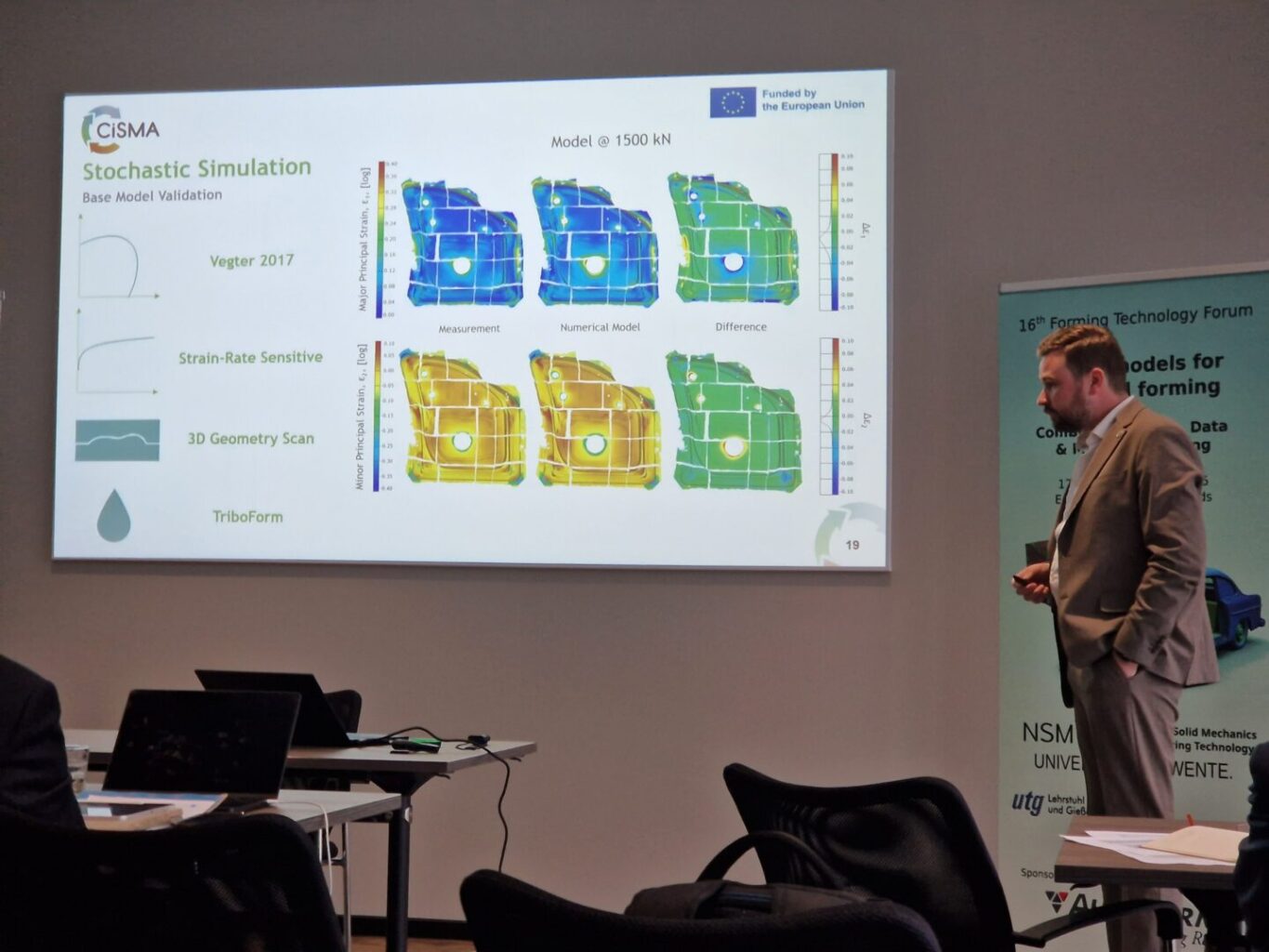
On 17-18 September, 2025, CiSMA partners from Blekinge Institute of Technology (BTH), Tata Steel Nederland and Volvo Cars showcased project work on the application of hybrid models to forming processes at the 16th Forming Technology Forum 2025, that took place in Enschede, The Netherlands.
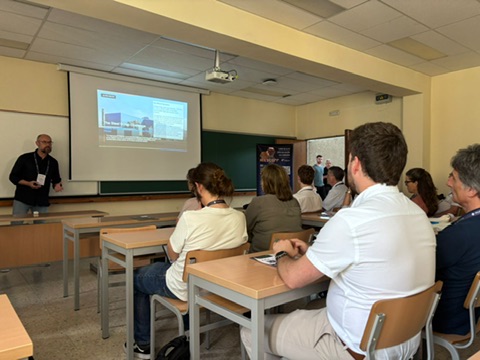
On the first day, Mats Sigvant, from BTH and AutoForm, presented an overview of FE-simulations of Car Body part production.
On the second day, Toni Chezan from Tata Steel Nederland presented the contribution “Enabling Coil-Data Responsive Forming via Draw-in Monitoring and Global Control Parameter Tuning”, co-authored with partners from BTH and Volvo Cars. Chezan explained how variability in steel sheets can affect forming processes and how real-time coil monitoring combined with smart global adjustments can help bridge the gap between ideal simulations and industrial reality.

Additionally, Alexandre Barlo, from BTH, delivered a presentation on “Supporting the Industrial Transition from Conventional to Sustainable Steels through Data Driven Operation Support”, also co-authored by partners from Tata Steel and Volvo Cars. It was discussed how the European steel industry’s shift toward low-carbon production using Electric Arc Furnaces and higher scrap content introduces more variability in steel sheets. Traditional forming processes are tested on small samples that often don’t capture this variation, but data-driven operation support can help manufacturers adapt in real time, ensuring quality while moving toward more sustainable steel production.
CiSMA is paving the way for more efficient and sustainable metal forming solutions in the automotive sector by uniting academic innovation with real-world manufacturing expertise.
The Forming Technology Forum, focused this year on the application of hybrid models to forming processes, brought together researchers and practitioners in production technology, materials, modelling and process control to share and benefit from each other’s experience through high quality presentations and lively discussions. This conference offers a highly interactive, supportive and collaborative environment by having only plenary sessions and encouraging lively discussions after each talk.