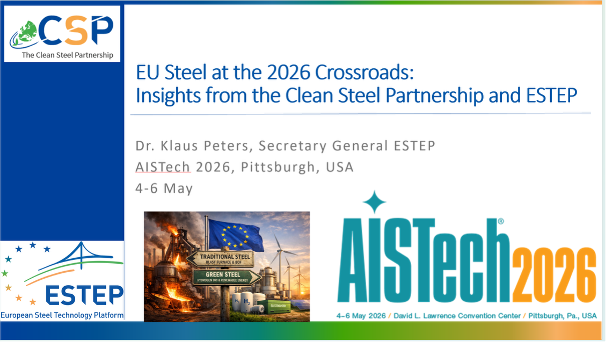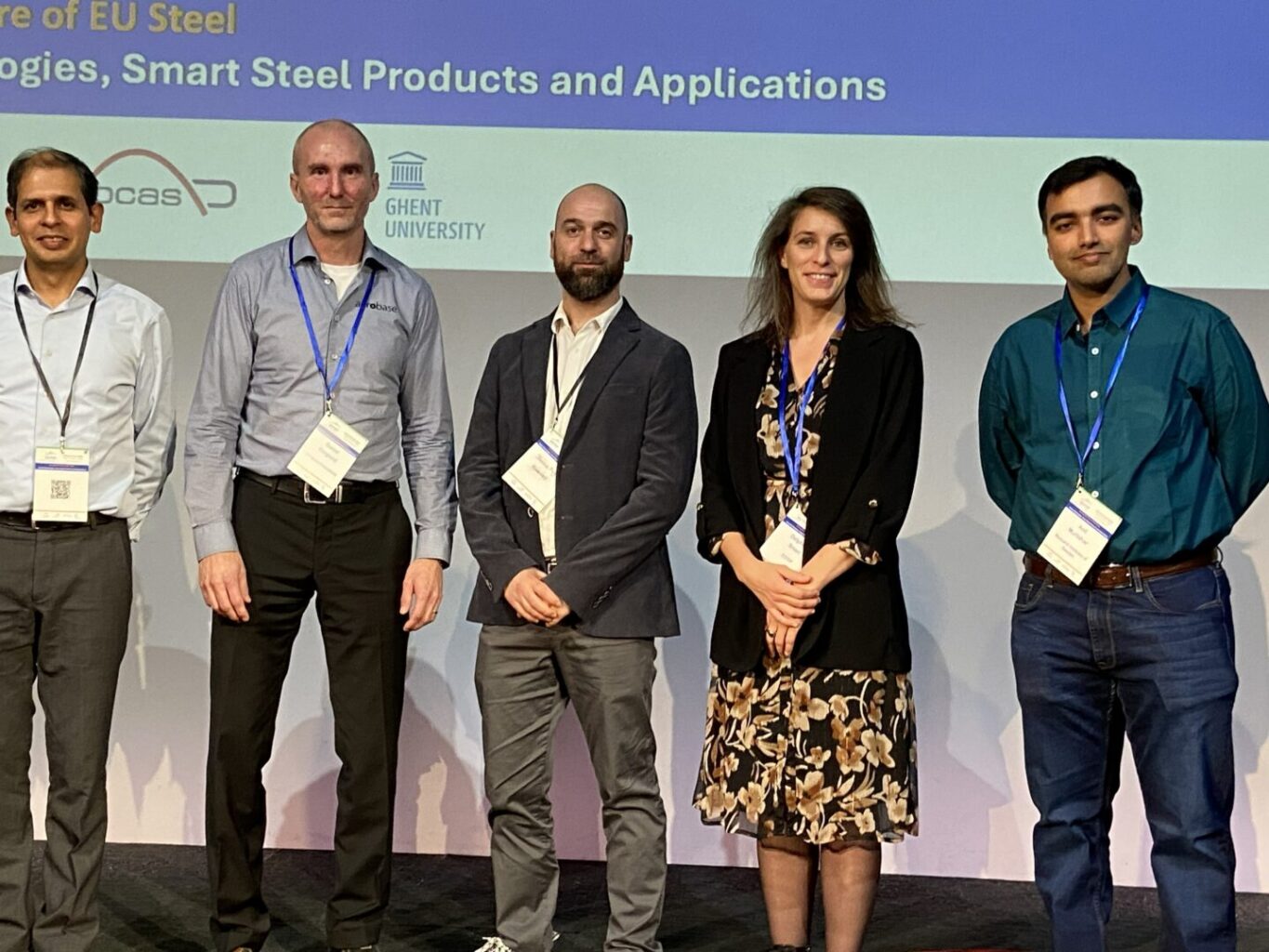
ESTEP Annual Event, organised by the European Steel Technology Platform (ESTEP) under the theme “Paving the Future of EU Steel: Clean Technologies, Smart Steel Products and Applications”, brought together researchers, industry representatives and European stakeholders to discuss advances in steel decarbonisation, circularity, innovative materials and digital technologies.
CiSMA contributed to the technical programme through two presentations delivered by project partners RISE Research Institutes of Sweden and Aerobase, highlighting innovative approaches to improving the characterisation and performance of recycled steels.
Advancing steel formability testing and AI-driven modelling
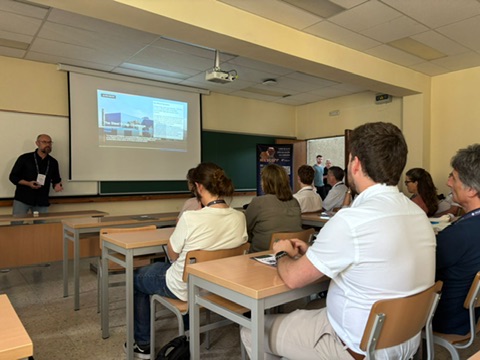
On 21 October, Anil Kumar Murlidhar, from RISE Research Institutes of Sweden, presented “Rapid and Cost-Effective Approach to Determining Forming Limit Curve via Modified Erichsen Testing for Circular Steels.”
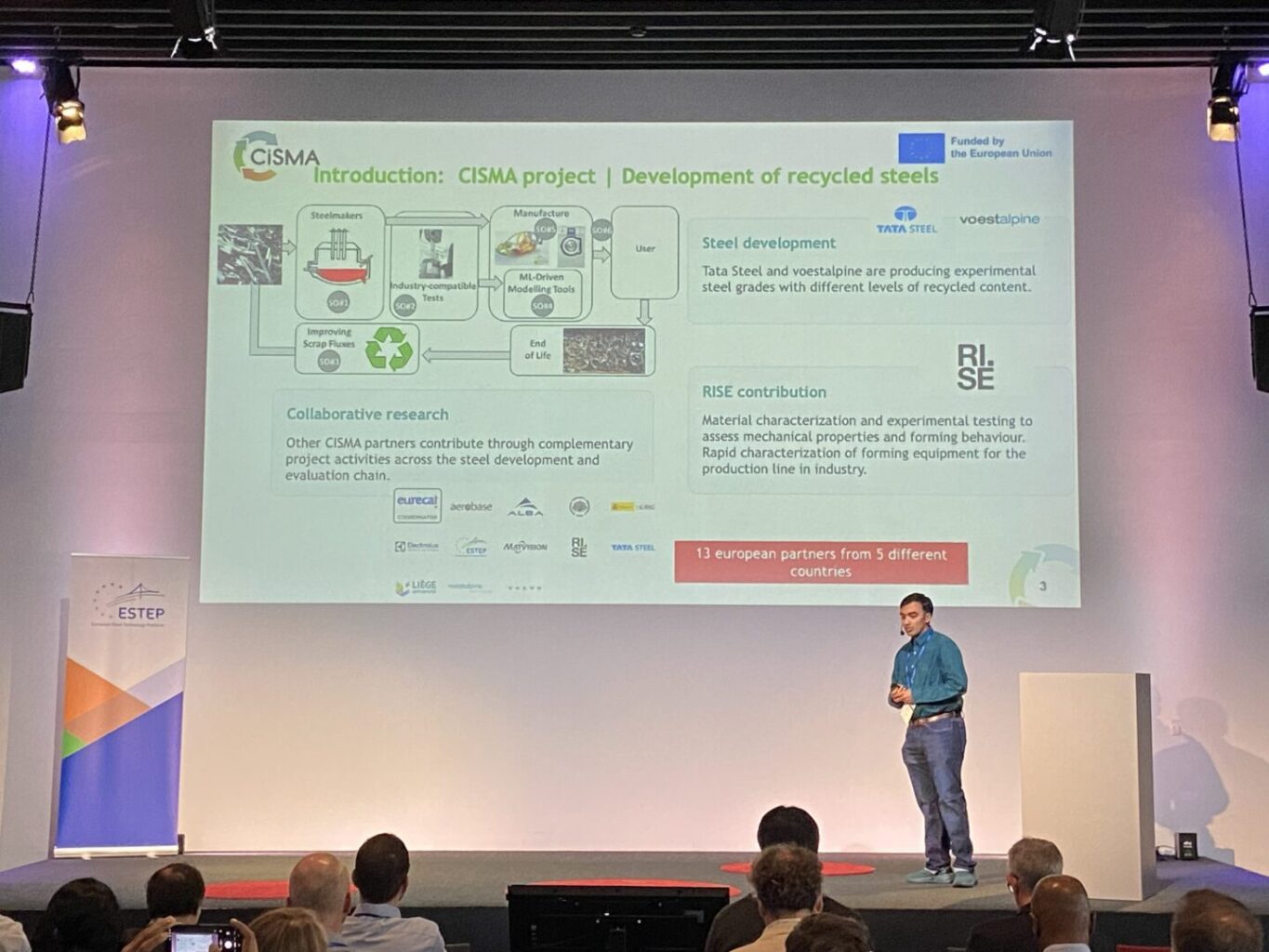
The presentation explored an alternative approach to determining forming limit curves, which are essential for assessing how steel sheets behave during industrial forming processes. By investigating modified Erichsen testing and comparing it with conventional Nakajima tests, the research aims to support more efficient and cost-effective material characterisation, particularly relevant to the development and industrial application of recycled steel grades.
On 22 October, Daniel Berglund, from Aerobase, presented “PHASES Agent: an AI Agent for Physics-Based Digital Metallurgy” during the session dedicated to predictive modelling and digital metallurgy.
The presentation introduced an AI-driven approach combining physics-based modelling with advanced simulation capabilities to predict material behaviour and support steel development and manufacturing processes. Such tools are particularly relevant to CiSMA’s efforts to better understand the effects of residual elements in scrap-based steels and optimise their performance.
Strengthening collaboration with European steel research projects
Beyond the technical presentations, the conference provided an opportunity to foster collaboration with other European research initiatives.
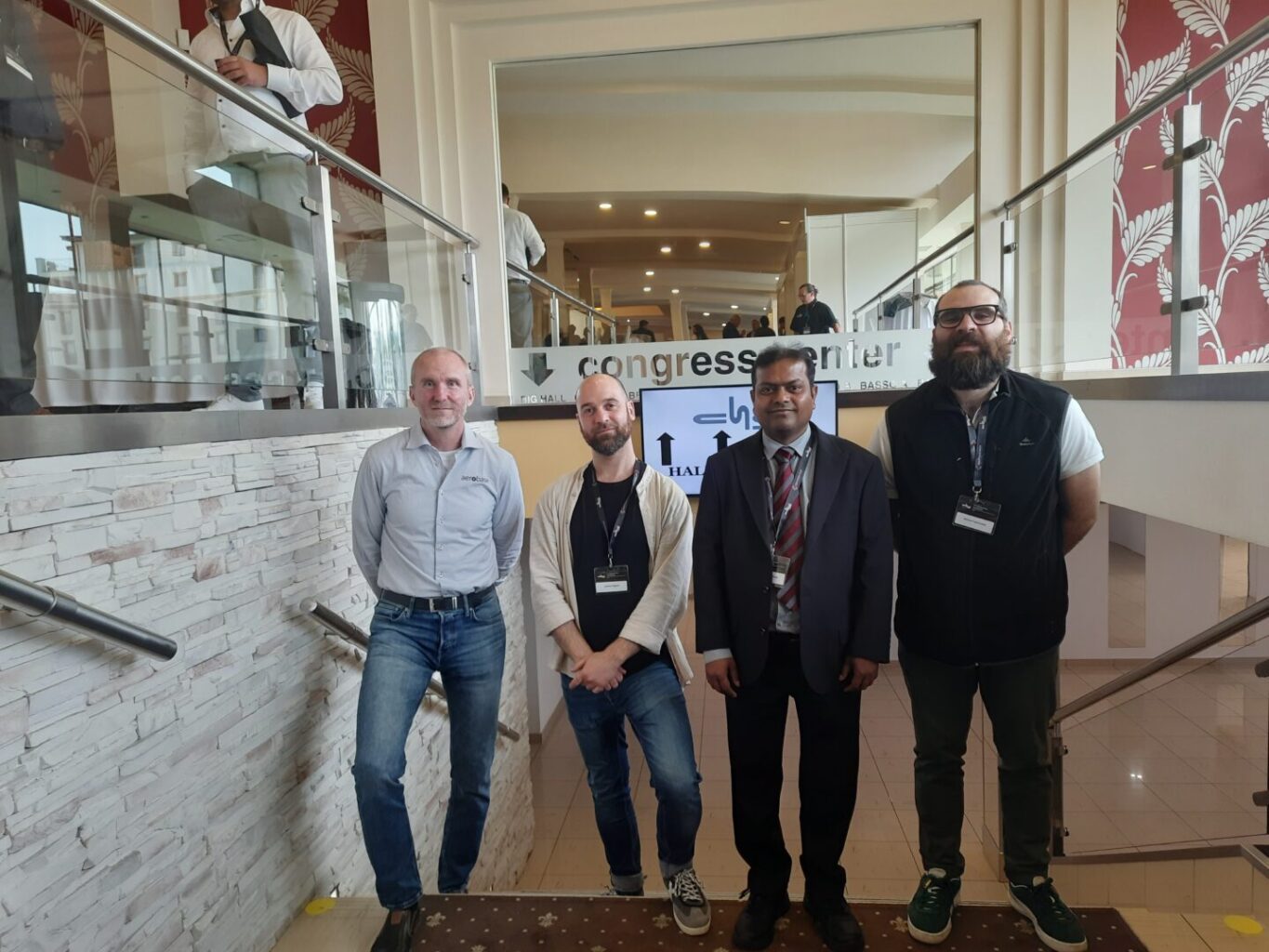
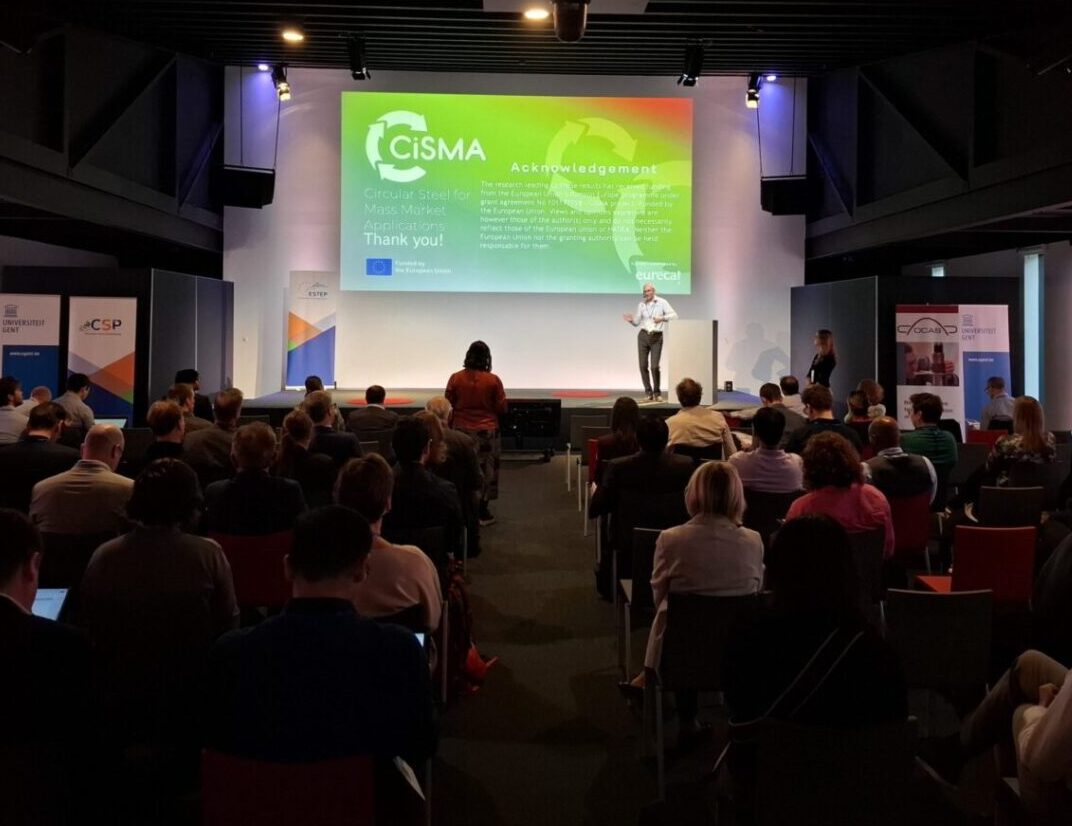
Jaume Pujante, CiSMA project coordinator from Eurecat Technology Centre, attended the event and participated in networking and clustering activities with representatives from the MOWSES project, developing safer and more sustainable structural steel solutions with increased recycled content.
This exchange allowed the projects to learn more about each other’s research activities, identify common challenges and explore potential synergies for future collaboration, knowledge sharing and joint dissemination activities.
The event was organised by ESTEP, a CiSMA consortium partner, with the involvement of Delphine Snaet and Akhilesh Swarnakar, contributing to knowledge exchange and collaboration across the European steel research and innovation community.
CiSMA’s participation reinforces its commitment to advancing the use of recycled steel in mass-market applications and strengthening cooperation with European initiatives working towards a more circular, competitive and resource-efficient steel industry.